
Hair loss is more than just a change in appearance. For many people, progressive thinning or a receding hairline can affect confidence and the way they feel about themselves.
The good news is that modern hair transplant surgery can restore hair in areas affected by thinning or baldness using your own hair follicles. Unlike older techniques that could create an obvious “plugged” appearance, modern hair restoration focuses on carefully designed hairlines, appropriate density and results that blend naturally with existing hair.
At Dr. Kunal Sayani’s clinic in Mumbai, hair transplantation is performed using established techniques such as Follicular Unit Extraction (FUE) and Follicular Unit Transplantation (FUT), with the technique selected according to the patient’s hair-loss pattern, donor area and individual goals.
What Is a Hair Transplant?
A hair transplant is a surgical procedure in which healthy hair follicles are taken from a donor area—usually the back or sides of the scalp—and transplanted into areas affected by thinning or baldness.
These transplanted follicles can continue to produce hair in their new location.
The procedure is commonly used for:
- Receding hairlines
- Male pattern baldness
- Crown thinning
- Areas of reduced hair density
- Selected cases of hair loss caused by other conditions or previous procedures
However, not every type of hair loss requires or responds to a hair transplant. A proper scalp and hair assessment is important before deciding on surgery.
Why Does Hair Loss Happen?
One of the most common causes of progressive hair loss is androgenetic alopecia, also known as male or female pattern hair loss.
Genetics and hormones play an important role. In susceptible individuals, the hormone DHT (dihydrotestosterone) can cause certain hair follicles to gradually become smaller. Over time, these follicles produce thinner and shorter hairs before potentially stopping hair production.
Other causes of hair loss can include nutritional deficiencies, hormonal changes, certain medical conditions, medications, stress and scalp disorders.
This is why diagnosing the cause of hair loss should come before choosing a treatment.
How Does a Hair Transplant Work?
A hair transplant generally involves three important stages:
1. Hairline & Treatment Planning
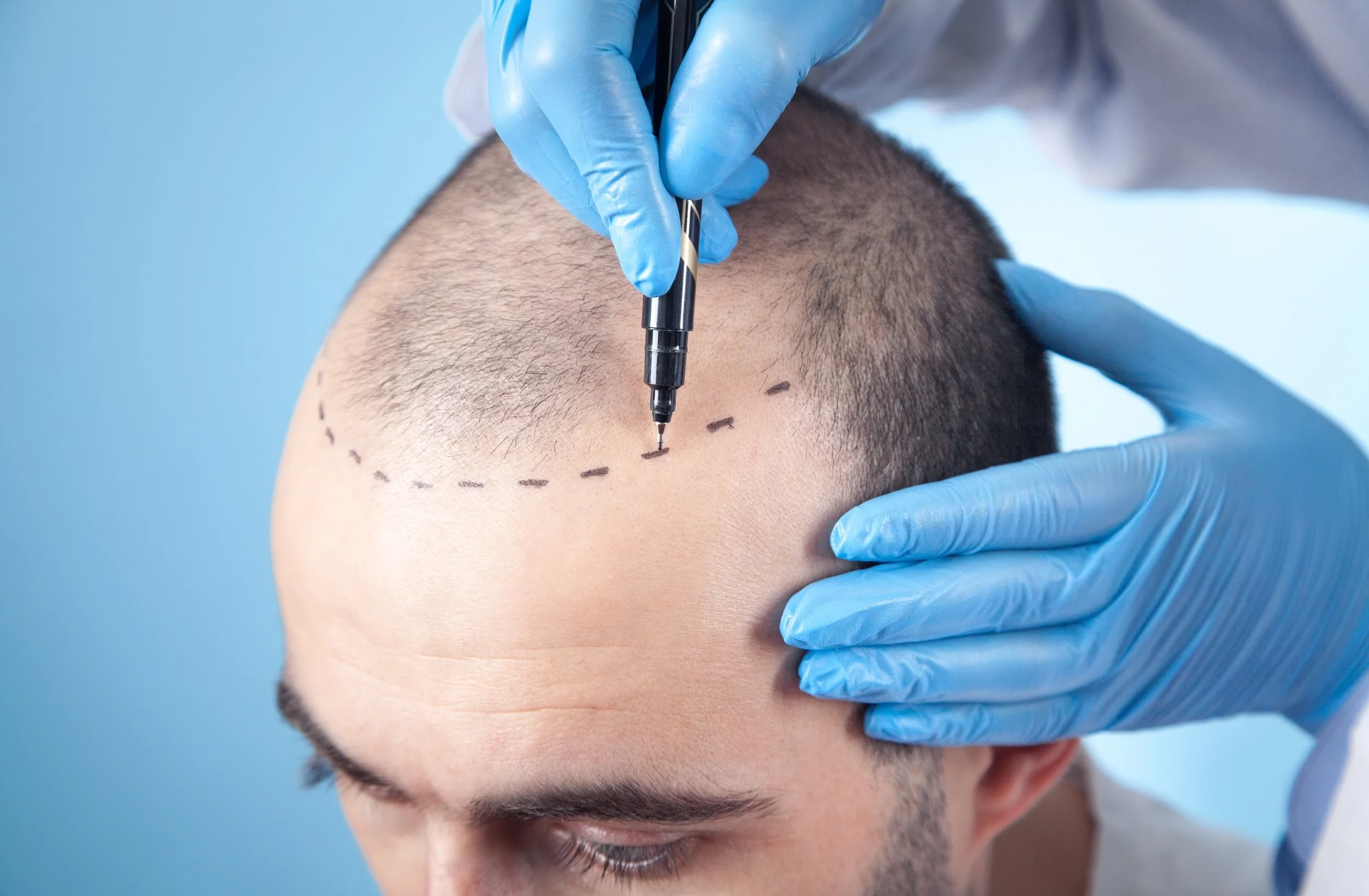
The first step is designing a hairline that suits your facial proportions, age and existing hair pattern.
The surgeon also evaluates the donor area to determine how many healthy follicles are available.
2. Harvesting Hair Follicles
Healthy follicular units are carefully removed from the donor area.
Depending on the chosen technique, this can be performed using FUE or FUT.
3. Implanting the Grafts
The harvested follicles are then placed into carefully planned recipient areas.
The direction, angle and distribution of the grafts are important because they influence how naturally the transplanted hair will blend with the surrounding hair.
At Dr. Kunal Sayani’s clinic, the hair transplant procedure is generally performed under local anesthesia, and the duration depends on the number of grafts required.
FUE vs FUT: What’s the Difference?
Two established techniques used for hair transplantation are FUE (Follicular Unit Extraction) and FUT (Follicular Unit Transplantation).
| FUE | FUT |
|---|---|
| Individual follicular units are extracted | A strip of scalp is removed |
| Leaves tiny circular extraction marks | Leaves a linear scar |
| Often suitable for people who prefer shorter hairstyles | Can allow harvesting of a larger number of grafts in selected cases |
| Healing at individual extraction sites | Usually involves a longer healing period at the donor incision |
Neither technique is automatically the “best” for everyone.
The appropriate approach depends on factors such as donor hair density, hair-loss pattern, number of grafts required, previous procedures, hairstyle preferences and long-term hair restoration goals.
Who Is a Good Candidate for a Hair Transplant?
A hair transplant may be considered when you:
- Have a stable or predictable pattern of hair loss
- Have sufficient healthy donor hair
- Have realistic expectations about the outcome
- Want to restore a receding hairline or areas of reduced density
- Are generally healthy enough to undergo the procedure
The quality of the donor area is particularly important.
A person with extensive baldness but limited donor hair may have fewer options for achieving high density. This is why an individual assessment is more useful than simply deciding on a number of grafts based on photographs or advertisements.
Will a Hair Transplant Look Natural?
A well-planned hair transplant should aim to restore the appearance of natural hair growth rather than simply add as many grafts as possible.
The hairline is particularly important.
A natural-looking result depends on factors such as:
- Hairline design
- Graft placement
- Hair growth direction
- Density
- Donor hair characteristics
- Existing hair
- Future progression of hair loss
Modern transplantation uses naturally occurring follicular units containing one or more hairs, allowing the surgeon to recreate different levels of density across the scalp.
What Happens After a Hair Transplant?
Hair transplant results do not appear immediately.
It is normal for the transplanted hairs to go through a period of shedding before new growth becomes visible. Hair growth then develops gradually over the following months.
During recovery, patients may experience temporary:
- Redness
- Swelling
- Mild discomfort
- Scabbing or crusting
- Temporary shedding
Your surgeon will provide specific instructions regarding washing, medications, physical activity and scalp care.
Following these instructions carefully can help support proper healing.
Are Hair Transplant Results Permanent?
Transplanted hair is generally taken from areas of the scalp that are more resistant to the effects of pattern hair loss.
However, a hair transplant does not necessarily stop future hair loss in your untreated hair.
This distinction is important.
You may successfully restore the hairline while existing, non-transplanted hair continues to thin over time. Depending on the individual case, medical hair-loss treatments may therefore be recommended alongside or after transplantation.
The goal is not simply to restore hair today, but to create a result that remains appropriate as your hair changes over time.
Does a Hair Transplant Hurt?
Hair transplantation is generally performed using local anesthesia, which numbs the treatment areas during the procedure.
Patients may experience some sensation or mild discomfort during parts of the process, and some soreness or tightness can occur afterward.
The exact experience varies from person to person.
Your surgeon should explain the anesthesia, recovery and aftercare process before the procedure so that you know what to expect.
How Much Does a Hair Transplant Cost in Mumbai?
There is no single price for every hair transplant.
The cost can depend on:
- Number of grafts required
- Extent of hair loss
- FUE or FUT technique
- Donor hair characteristics
- Complexity of the procedure
- Surgical and facility requirements
Dr. Kunal Sayani’s current website lists hair transplantation on a per-graft pricing basis, while noting that charges can vary according to individual requirements.
A consultation is therefore important before determining the appropriate number of grafts and treatment plan.
Hair Transplant Is Not the Right Solution for Everyone
One of the biggest misconceptions about hair transplantation is that it is a universal solution for hair loss.
It isn’t.
Some people may benefit more from medical treatment or non-surgical hair restoration approaches, particularly when hair loss is detected early.
Dr. Kunal Sayani’s hair-loss services also include non-surgical and regenerative approaches such as GFC, exosome-based treatments, mesotherapy, LLLT and other therapies depending on the underlying condition.
The right treatment should therefore begin with identifying why you are losing hair and how much healthy donor hair you have available.
Choosing a Hair Transplant Surgeon
A hair transplant is not simply about extracting and implanting hair follicles.
The surgeon’s understanding of facial proportions, hairline design, donor management and long-term hair-loss patterns can significantly influence the overall plan.
When choosing a surgeon, consider:
Qualifications and experience
Look at the surgeon’s formal training and experience in plastic surgery and hair restoration.
Natural-looking planning
A good hairline should complement your face rather than look artificially straight or overly dense.
Donor-area management
Your donor hair is a limited resource. Using it strategically is important for long-term planning.
Individualised treatment
The number of grafts and technique should be based on your specific condition rather than a fixed package.
Hair Transplant with Dr. Kunal Sayani
Dr. Kunal Sayani is a Plastic & Aesthetic Surgeon based in Mumbai with over 10 years of experience in aesthetic and reconstructive surgery. He completed his MCh in Plastic & Reconstructive Surgery and MS in General Surgery from Grant Medical College and Sir J.J. Hospital, Mumbai, and also holds a DrNB from New Delhi.
At his clinic, hair transplant planning begins with assessing the pattern of hair loss, donor area, desired hairline and expected coverage. FUE or FUT can then be considered according to the patient’s individual characteristics and goals.
The focus is not simply on adding grafts, but on creating a hair restoration plan that looks appropriate and natural as your existing hair changes over time.
Final Thoughts
Hair loss doesn’t have to mean accepting progressive thinning or a receding hairline without exploring your options.
A hair transplant can be an effective option for suitable candidates, but the success of the procedure depends on much more than the number of grafts transplanted.
Proper diagnosis, donor-area assessment, hairline design, surgical technique and long-term planning all matter.
If you’re considering a hair transplant in Mumbai, start with a professional evaluation to understand the cause of your hair loss, whether you’re a suitable candidate, how many grafts you may need and which treatment approach is appropriate for you.
Want to explore your hair restoration options?
Consult Dr. Kunal Sayani at Tvameva Aesthetics, Mumbai, for an individual assessment and personalised treatment plan.
Leave a Reply